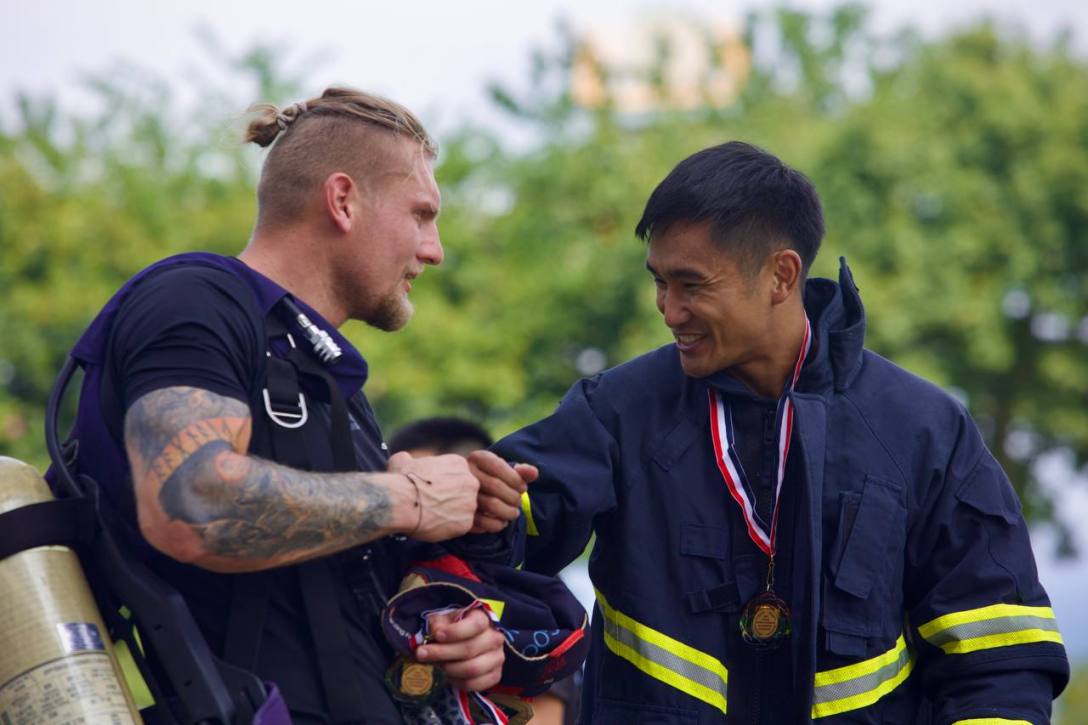
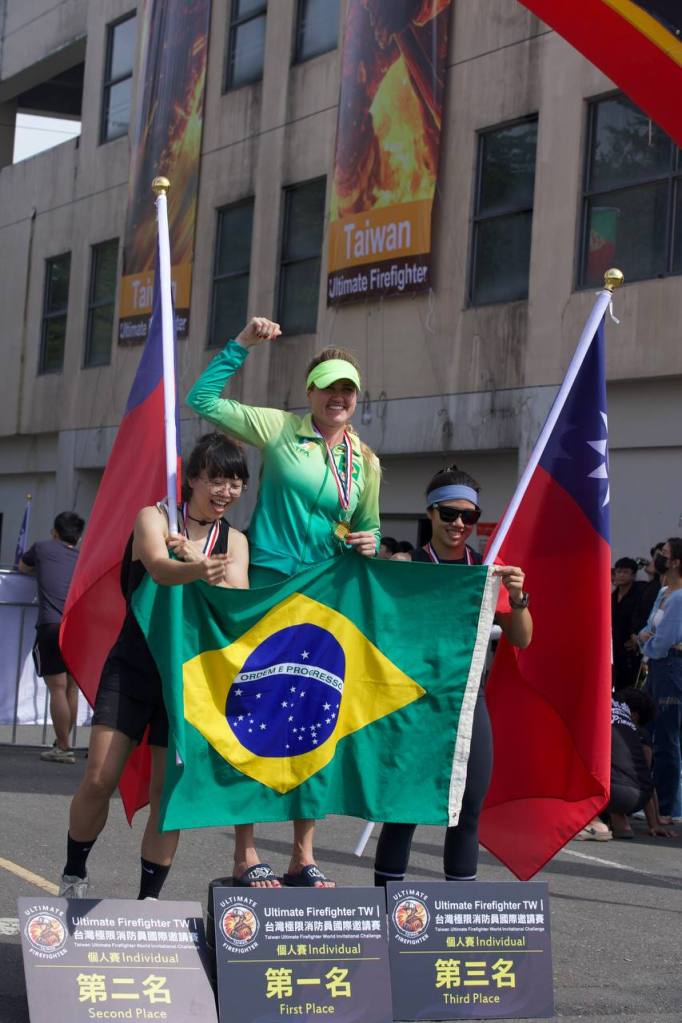
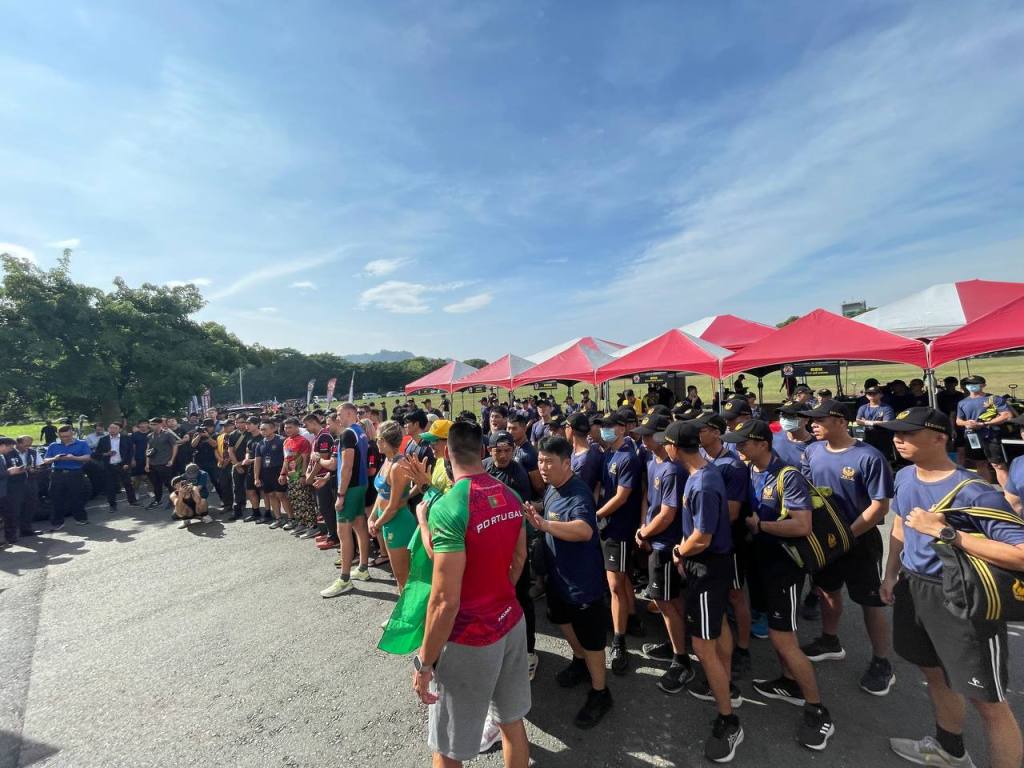
On the eve of a typhoon, this memorable day marked the inaugural “Taiwan Ultimate Firefighter International Invitational." Held successfully at the NFA Taiwan Training Center in Zhushan, Nantou, the event unfortunately had to cancel the second day’s team competitions due to the approaching storm. However, from eight in the morning to eight at night on the first day, we witnessed various forms of tactical strength displayed in extraordinary ways.
This kind of strength was something I had only seen on television before—later on YouTube. But nothing compares to experiencing it live. Tactical fitness in firefighting is unfamiliar to most of us. Yet firefighters are so close to us, zooming past with sirens blazing daily, that it’s easy to take their presence for granted.
💡 Proximity often breeds neglect.
The “Ultimate Firefighter" competition is inspired by the World Police and Fire Games that began in California, USA, organized by the nonprofit @bhm2025. Taiwanese firefighters have actively participated as teams in recent years, making notable impressions. This year, thanks to the efforts of the “Taiwan Pioneers," Taiwan hosted its own distinctive, visually engaging competition.
The resilience showcased in this competition deserves our admiration. For those of us who grew up with action heroes, strength was often represented by muscular figures standing out with an air of invincibility. The 1980s and 1990s brought box-office hits featuring strongmen, defining our generation’s view of strength.
💡 But big isn’t always strong; strong is strong.
This tactical strength is different from screen strength; it’s purpose-driven. While people pursue strength for various reasons, the motivation to become stronger to save others—as well as oneself—is unique to this profession. Unlike elite sports, which focus on selecting and refining talent, firefighting cultivates a completely different kind of “strength culture.”
The first time I truly understood this strength—capable of saving oneself and others—was through a story my father told me. My late grandfather had once saved an entire village during the catastrophic 1959 flooding in Taiwan. Our family home stood by a large irrigation canal. When typhoon rains swelled the river, fallen bamboo blocked the flow, threatening to flood the village. My grandfather, an avid fisherman and a strong swimmer, grabbed a knife and dove into the water. He chopped away the debris, clearing the channel so the river could flow downstream.
Having swum in rivers worldwide, I can attest to the difficulty of that feat. It required not only courage but strength, skill, knowledge, and an indomitable spirit. My grandfather was just 170 cm tall and weighed 60 kg, but his strength was mighty. This kind of strength combines power, resilience, and practical skill, ready to be used when needed. When it is, it enables both self-reliance and mutual assistance, restoring normalcy for everyone.
This atmosphere of strength is contagious. But it’s different from the so-called “toxic masculinity" we often hear about. At the Ultimate Firefighter competition, during the hose task at the first station, I watched male and female firefighter athletes running forward with two hoses on their backs, teammates assisting each other. It filled me with admiration.
Is this kind of strength something that can be learned? Should we be encouraging the pursuit of such strength?



探索更多來自 T.H. Schee 的內容
訂閱即可透過電子郵件收到最新文章。
 T.H. Schee