Taiwan’s fortunate outcome is interesting also because the country implemented neither a lockdown nor mass testing.
This blog entry does not attempt a full account of how Taiwan managed to control Covid-19.[1] The aim is more limited: to explore the role of digital tools in Taiwan’s response, and if possible draw some first conclusions about the implications of the Taiwanese experience for current German and European debates.
If you’ve been involved in designing or implementing IT systems for crisis response, I think you will love the table. The table aims to serve as a fresh and informed start for serious discussion, and a short compendium to my previous posts (here and here).
The “Taiwan Model" story has been told countless times in different media reports and none is detail enough about the IT and non-IT systems supporting these efforts. Some measures are pretty controversial though. I was personally involved in one of the largest natural disasters (Typhoon Morakot) in Taiwan back in 2009, spending days just to figure out the information flow in a life and death situation, and we had a team of pretty good volunteers (60+) recruited via an NGO that I co-founded with bunch of friends an year earlier. We worked 24×7 in and out of the government emergency centers all over the island. The experience was once in a life time, and that’s why I also care this time.
I generally try to stay away from the media and this has been true for at least 8 years. But the situation is so challenging and urgent that you have to act right away by sharing the lessons everyone has learned. This is a short video interview by the LTN, the largest circulated daily paper published in Taiwan. The editor was interested in hearing the story after the “Presidential Alert" was issued on Feb 8 to EIGHT MILLION PHONES all at once in northern part of Taiwan.
The underlying technology is called “cell broadcast" as commonly understood. This case is critical because it involved the famous cruiser line that caused Japan much trouble in February: the Diamond Princess.
It wasn’t the first time that the government made a minor or seemingly trivial mistake, but given the scale of the event, it could have created unimaginable harm. An unclear string of URL, which at that time was hooked to a famous URL shortener service, was included in the Alert. Given shopping scams are rampant in Taiwan and the URL shortening was one of the techniques scammers used, many people receiving the alert had confusions over whether the “urgent message" was authentic or not. Things like this can be avoided.
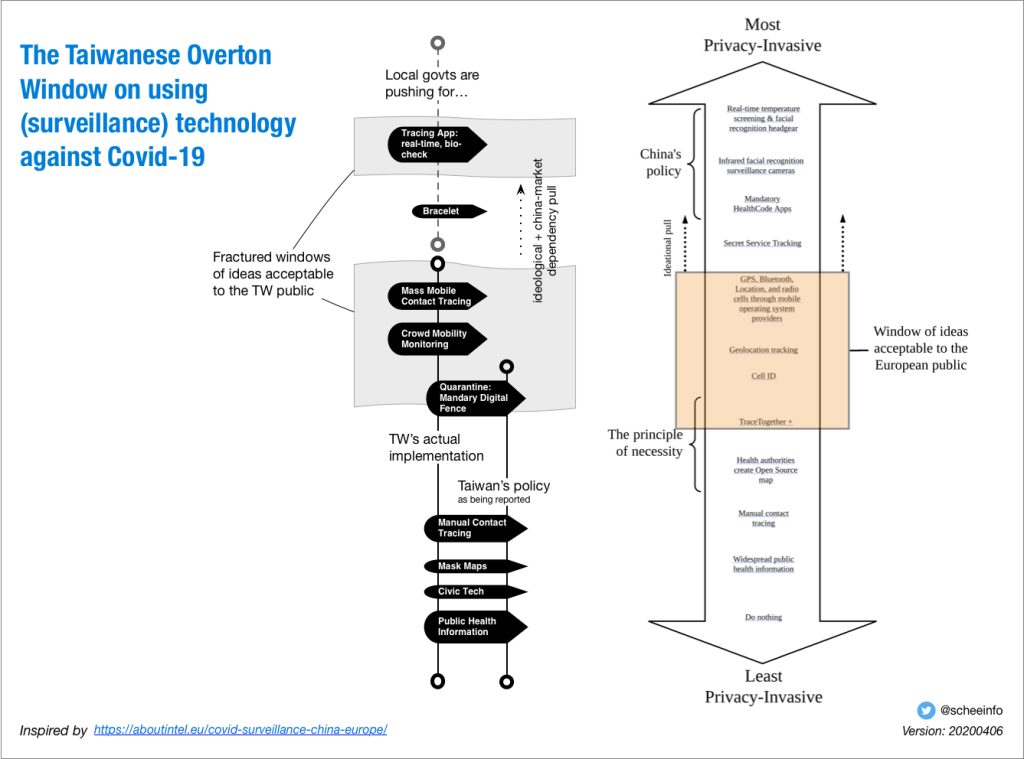
If we really need to introduce surveillance technologies in combating COVID-19, what would be the models, ideas and practices to look after? And what might be the consequences for the whole society if those means are implemented? I did a quick one concept graph over the dinner table (again).
Overton window: “an approach to identifying the ideas that define the spectrum of acceptability of governmental policies."
Had quick interview with BBC World Service (radio) via London this Friday – it was succinct and nice. My short note (not actual interview content) here is more extensive (but not exhaustive) for anyone who’re studying or interested in understanding whether the whole “digital measure” “geofencing” is working or not. Further research is dearly required to claim that the “Taiwanese Model” or “Digital Measure” has been contributing to the success of containment.
Why Taiwan has succeeded in first phase of virus containment?
Act early with strong political determination
You are basically on your own. Isolation helps in this regard, and you have to exhaust all possible means you’ve learned
Learning from SARS experience (playbook in existence)
30 days of critical medical resource in reserve at major hospitals
Extensive screening of travelers coming from the epicenter of outbreak since week one (as early of first week of January)
Mobilization of society?
The region is natural disaster-prone and social mobilization not a new idea or doctrine. This is lesser known or aware of. We’ve all been mobilized sometime in the past.
What about digital measures?
A mixture of digital tracking means have been used on:
And unknown machine learning methods to identify high-risk clusters has been implemented.
Who have been targeted by digital measures?
Objectives: (a) ahead of the curve (b) enhancing situational awareness (c) supporting epidemic survey
Four groups of people are targeted using extensive, large-scale, intrusive (or non-intrusive) means of digital measures
Infectants (300+ ppl)
Home Inspection (6,000+ ppl)
Home Quarantine (50,000+ ppl)
And those having possible physical contact with aforementioned three groups (using cell tower data, private call log, travel histories).
The data is integrated in epidemic survey system(s). Number of people been surveyed or tracked is unknown for the last group of people.
In the Spring Break Holiday (April 2-5), we’re also seeing the government sending out “Presidential Alerts" (via cell broadcast) to selected geographical regions where tourists are gathering and staying, and police forces have been dispatched to alerted sites right away to take care of the situation. It is possible that the government has human mobility monitoring systems in action, as supported by major telco operators, CECC (Central Epidemic Control Center), and cbe.tw.
The problems (and cost) as you see it?
Local governments are experimenting “novel ways” to enforce very strict (but may not be necessary) rules and fine the shit out of violators with thin or zero legal basis (a) violation of geofencing (b) violation of improper disposes of masks (c) violation of not wearing masks when using public transportation. Based on report from various media, very high false-positive ratio is widely observed and reported by the police stations which need to dispatch officers to check if alarm has been issued
Linking and even merging of critical databases (big no-no…) with questionable legal basis (grey area)
Indefinite retention of all the datasets and IT systems
Application retirements policy (sunsetting of systems) unknown
Taiwan is one of the most targeted countries in terms of cyber attacks on critical and civilian IT systems, and the government does not have a reputable record of protecting these systems and data
I hope it’s not moving into the direction of digital “TTW” despite having early resolution, strong public health sector investment and swift actions before April that made Taiwan a spotlight of attention up till now.
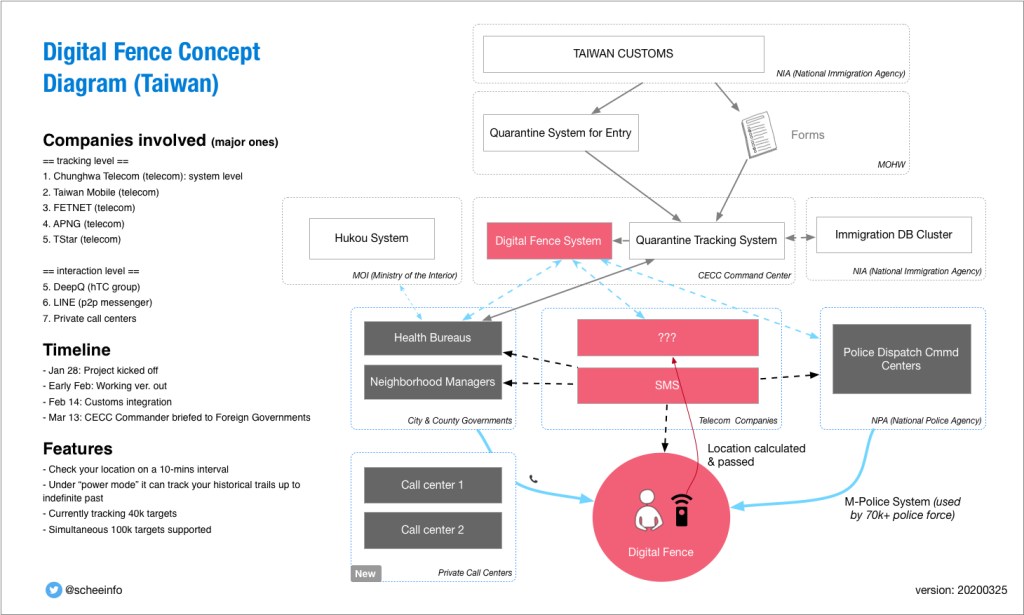
A few reports are out (BBC, Reuters). The concept diagram is for research purpose. Currently the government of Taiwan is tracking more than 40k targets having to take home quarantine measures, and this is enforced without proper debate. I did a quick draw and this is what we know so far about the “digital fence” system enacted. My personal position is: this is extremely intrusive.
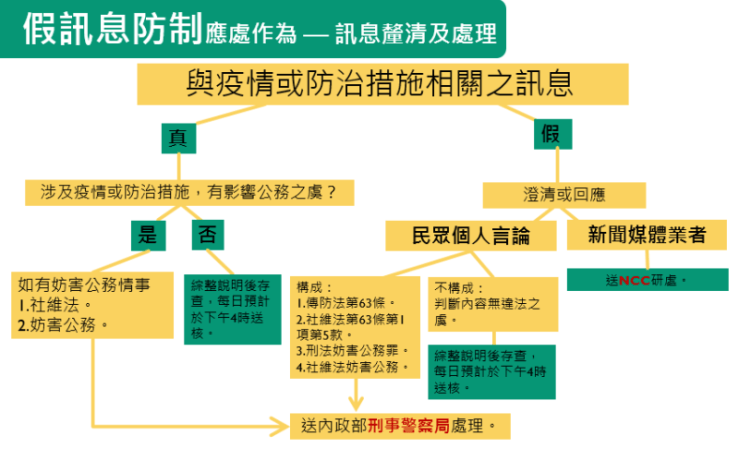
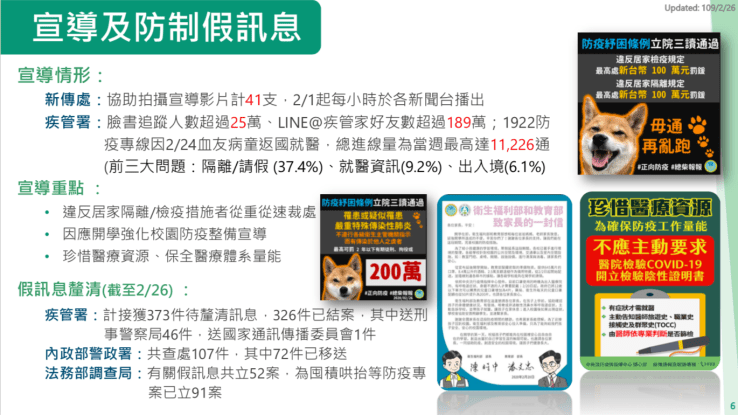
警方再次呼籲民眾勿隨意製造、散布或轉傳涉及新型冠狀病毒肺炎疫情之不實、未經查證之訊息,是類案件於抗疫期間必依法速查嚴辦。另請民眾全力配合政府相關防疫措施,相關資訊可上疾管署網站查詢最新公告內容,並可加入衛生福利部疾病管制署之「疾管家」官方LINE帳號,接收最新的疫情及防疫知識;還可透過「美玉姨」、「My Go Pen」等網路訊息查證平臺辨識訊息真偽,全民一體共同防禦新型冠狀病毒感染之肺炎可能帶來之危害。
撇開 typo 不論,「美玉姨」和「My Go Pen」不是「網路訊息查證平台」,自然也無法達到「辨識訊息真偽」的用途。










 T.H. Schee